5 Reasons To Watch Arthur Chen And Sun Qian’s C-Drama “Love Story In The 1970s”
Key takeaways
Quick summary- 1Based on Meng Zhong De Yi’s novel, which is literally translated to “Pragmatist’s Love,” “Love Story in the 1970s” is a C-drama set against the backdrop of 197…
- 2The series follows the evolving relationship between Fang Mu Yang (Arthur Chen) and Fei Ni (Sun Qian), tracing
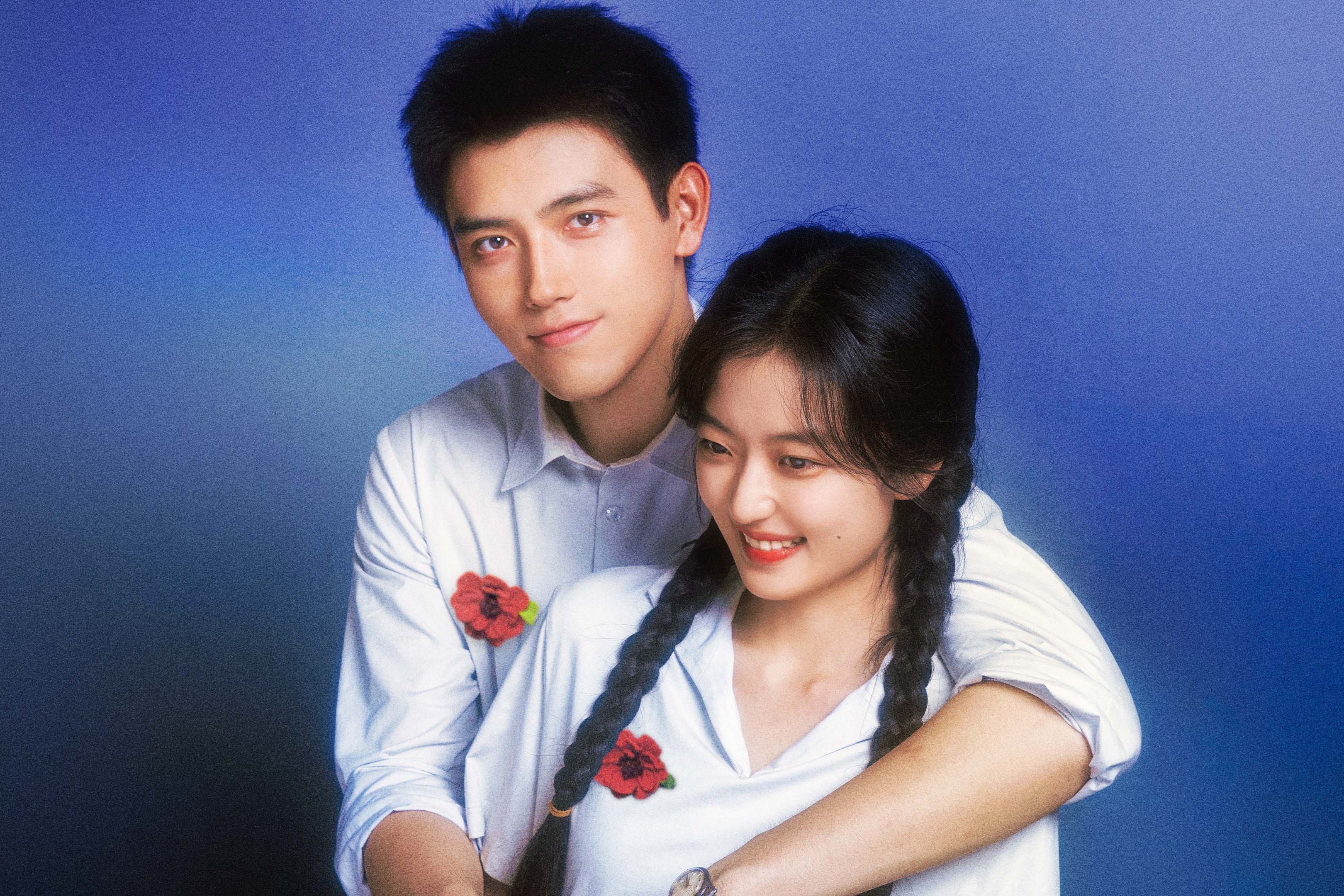
Based on Meng Zhong De Yi’s novel, which is literally translated to “Pragmatist’s Love,” “Love Story in the 1970s” is a C-drama set against the backdrop of 1970s China. The series follows the evolving relationship between Fang Mu Yang (Arthur Chen) and Fei Ni (Sun Qian), tracing their journey from classmates to friends and to a couple bound by a marriage of convenience that slowly blossoms into genuine love.
As the story unfolds, the couple navigates the challenges of life in 1970s China, supporting each other through difficult circumstances while continuing to pursue their individual dreams even when the world seems to stand in their way.
Here are five reasons why “Love Story in the 1970s” is a C-drama worth watching.
Warning: spoilers ahead.
An unbiased glimpse into 1970s China
“Love Story in the 1970s” offers a fascinating window into life in 1970s China under Mao Zedong and the Communist Party. The drama presents the impact through the everyday struggles of ordinary people, allowing viewers to form their own conclusions.
One of the central conflicts that pushes the female lead, Fei Ni, toward life-changing decisions is her love for her older brother. He cannot marry his girlfriend because the family has no space for a new couple. Their home has only one room, which Fei Ni occupies, while their parents sleep in the living room. As a result, her brother must wait for Fei Ni to leave for university so the room can be freed.
However, in 1970s China, students could not attend university based solely on merit. They needed a recommendation from a superior, such as a factory director or a party leader. Despite being one of the most diligent workers and students, Fei Ni fails to receive that recommendation for four consecutive years.
While some may argue that the issue lies within the communist ideology itself, “Love Story in the 1970s” highlights a deeper truth. Ideology, no matter how carefully designed, is still implemented by people. And the human factor inevitably shapes the system, whether it is communism, capitalism, or socialism. Through Fei Ni’s experiences, the drama shows how those in power can hide behind the rhetoric of collectivism while making deeply personal and biased decisions about what others can or cannot achieve.
A slow-burn romance that unfolds naturally
If there is one phrase that perfectly describes “Love Story in the 1970s,” it is slow-burn romance.
From the very first episode, the relationship between the leads develops gradually. The male lead, Fang Mu Yang, has been in love with Fei Ni since the day he first met her in middle school. The drama charmingly portrays the young boy doing everything he can to get her attention, often by being annoyingly persistent, yet never disrespectful.
However, when he relocates, the two lose contact. Years later, Fang Mu Yang returns to the city, only to end up in a coma after getting into an accident while saving someone. During this time, Fei Ni takes care of him, partly in hopes of securing a university recommendation for being an honorable citizen. When he eventually wakes up, he has lost his memory.
Yet what makes the story even more compelling is that, despite forgetting his past feelings, Fang Mu Yang slowly falls in love with Fei Ni all over again. It beautifully reinforces his later belief that even without his memories, he is still the same person at heart.
True to the slow burn nature of the drama, Fei Ni does not immediately reciprocate his feelings. Even after the two marry to secure a housing unit, they sleep in separate beds. Despite the absence of grand confessions or overt physical affection, the drama quietly shows the couple growing increasingly dependent on one another.
Whether it is Fang Mu Yang tirelessly working to repair a television so Fei Ni can barter it for a job opportunity, Fei Ni fiercely defending him whenever someone criticizes him, Fang Mu Yang planning a large wedding to make her happy, or Fei Ni gradually becoming his partner in mischief, their love is not a blazing fire that burns brightly and fades quickly. Instead, it is like a seed slowly taking root, growing stronger over time until it becomes something enduring.
Thoughtful details that create a cinematic feel
A drama does not need elaborate CGI or grand spectacle to feel cinematic. Sometimes, it is the smallest details that make a story feel immersive and visually memorable.
In “Love Story in the 1970s,” director Chen Chang demonstrates a strong command of cinematic language through subtle yet thoughtful visual choices. From a drilled cookie tin being repurposed as a flower vase in the couple’s modest home, to that same tin later being used to create nightclub-like lighting during a midnight film projector scene while listening to Mozart, the series finds beauty in everyday objects. Even small moments, such as Fang Mu Yang painting a mural on the wall to cover up unsightly paint splashes while Fei Ni writes a hymn beside it to complement the artwork, add charm and personality to the setting.
The camera work, angles, and framing all contribute to the drama’s atmosphere, making each scene feel carefully crafted rather than staged. These small yet thoughtful details add emotional texture to the story and help elevate the series into something visually memorable.
Leads who perfectly complement each other
One of the drama’s greatest strengths lies in its central characters. Fei Ni and Fang Mu Yang, while they sharing similar moral values, express those values in very different ways.
One reason the textile factory director repeatedly refuses to recommend Fei Ni for university is that she views her as too individualistic. Although the director clearly holds a personal grudge against her, Fei Ni is indeed ambitious and independent, qualities that may not easily align with a strictly collectivist environment.
Despite this, she is also deeply committed to following the rules. For three years, she diligently works to correct every shortcoming the director points out in hopes of finally receiving his recommendation.
Fang Mu Yang, on the other hand, is equally individualistic but far less concerned with rigid rules. When something matters to him, he is not afraid to bend the system to make things happen.
For example, when the director refuses to allocate a housing unit to the newly married couple, Fei Ni becomes frustrated that following the rules has gotten them nowhere. Fang Mu Yang, however, comes up with a bold plan to sleep in the director’s office, deliberately embarrassing them until they finally give the couple their unit.
Their contrasting personalities ultimately complement each other beautifully. Fei Ni grounds Fang Mu Yang and keeps him focused, while Fang Mu Yang encourages Fei Ni to step outside her worldview and grow into a more confident version of herself. Together, they bring out the best in one another.
An ensemble cast that enriches the story
While “Love Story in the 1970s” centers on Fei Ni and Fang Mu Yang, at its heart it is an ensemble drama where every character contributes something meaningful to the narrative. The leads are not living in a vacuum, and many of their choices are shaped by the people around them.
Whether it is Fei Ni deciding to stop visiting Fang Mu Yang at the hospital and begin dating someone else for the sake of her brother, her eventual decision to marry Fang Mu Yang, or Fang Mu Yang organizing a grand wedding to honor Fei Ni’s family, each turning point is influenced by the relationships surrounding them.
Because every character plays a role in shaping the story, their lives feel deeply intertwined. This interconnectedness adds emotional depth and makes the drama feel vibrant and alive on screen.
In the end, “Love Story in the 1970s” is more than just a romance, it’s a heartfelt portrayal of life, love, and resilience in 1970s China. With its slow-burn romance, richly drawn characters, and cinematic attention to detail, the drama offers a story that is both intimate and sweeping, making it a must-watch C-drama.
Start watching “Love Story in the 1970s”:
Watch Now
Those in Southeast Asia can watch here!
Javeria is a binge-watching specialist who loves devouring entire K-dramas in one sitting. Good screenwriting, beautiful cinematography, and a lack of clichés are the way to her heart. As a music fanatic, she listens to multiple artists across different genres and stans the self-producing idol group SEVENTEEN
. You can talk to her on Instagram @javeriayousufs.
Currently watching: “Our Universe,” “Love Story in the 1970s,” and “The Practical Guide to Love” “Sniper Butterfly.”Looking forward to: “Four Hands”
Related groups
Click the same reaction again to remove it.
(Updates after load — yes, your readers are humans… mostly.)


_(53838093145)_(cropped).jpg)


![[Review] SWIM – BTS](https://kpopreviewed.com/wp-content/uploads/2026/03/bts-swim.png)


![[Review] ROSES – ZEROBASEONE](https://kpopreviewed.com/wp-content/uploads/2026/01/zerobaseone-roses.png)