
RM Is Expanding What It Means to Be a K-pop Artist
Key takeaways
Quick summary- 1RM’s Between You and Me exhibition reveals how the BTS leader is expanding the role of a K-pop artist through curation, Korean art, cultural connection, and ac…
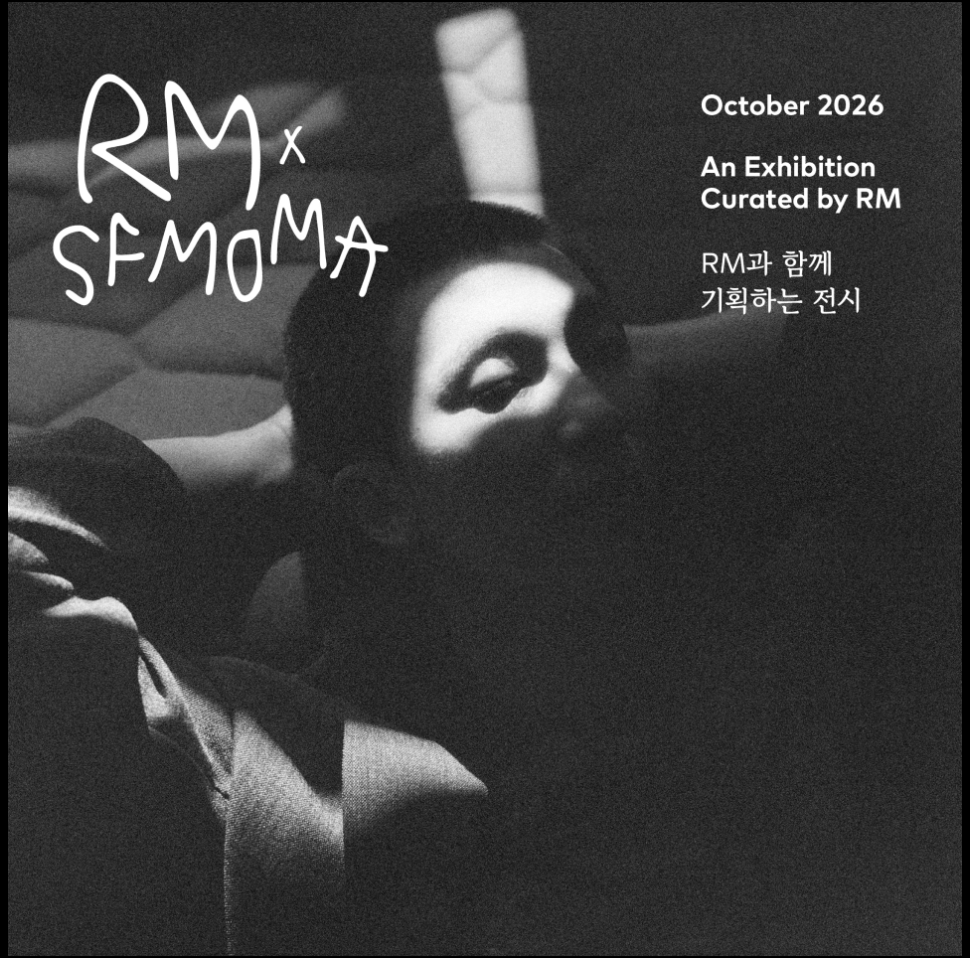
RM x SFMOMA: Between You and Me brings RM’s personal collection into conversation with works from around the world. Image courtesy of SFMOMA.
San Francisco Museum of Modern Art (SFMOMA)
Through Between You and Me, the BTS
×
 leader transforms a private
art collection into a bridge between Korean history, global audiences, and the
different parts of himself.
leader transforms a private
art collection into a bridge between Korean history, global audiences, and the
different parts of himself.
By Cena Haddad
There are many ways a celebrity can enter a museum.
Their image can become the subject of an exhibition. Their name can
attract visitors and attention.
RM
×
 is entering differently.
With RM x SFMOMA: Between You and Me, the BTS
×
leader is not simply lending his name or collection to the San Francisco Museum
of Modern Art. He is stepping forward as a co-curator.
The exhibition brings nearly 150 works from his personal collection into
conversation with pieces from SFMOMA’s holdings, creating a presentation of
almost 200 paintings, sculptures, ceramics, textiles, drawings, and design
objects.
Namjoon helped select and arrange the works, wrote personal gallery
texts, recorded an audio guide in Korean and English, and created an
accompanying playlist. Many pieces from his collection have never previously
been exhibited in the United States.
This is not celebrity branding disguised as curation.
It is an intimate act of translation.
For years, Namjoon has allowed art to influence how he writes, travels,
and understands himself. Now, he is inviting the public into that relationship
while leaving room for visitors to form interpretations of their own.
“We live in an age defined by boundaries,” he has said, describing the
divisions between East and West, Korea and America, the modern and
contemporary, and the personal and universal.
His hope is that the exhibition can become “a
small but sturdy bridge.”
Throughout his career, Namjoon has existed between worlds: idol and
individual, global celebrity and private observer, musician and collector,
representative of Korea and person still searching for his place within it.
Between You and Me does not resolve those identities.
It brings them into the same room.
The Artist Behind the Artist
Long before his collection entered SFMOMA, art had become part of how
Namjoon moved through the world.
His museum visits became familiar to fans: quiet photographs beside
paintings, reflections shared after exhibitions, and recommendations that sent
thousands searching for artists they may never have encountered otherwise.
What began as curiosity gradually became something deeper.
For a person whose life is defined by constant movement, art offered
stillness.
Namjoon has described feeling as though he is always “drifting and
floating somewhere,” even in Seoul, the city where he was born and raised.
“I think I’ve leaned on art a lot because of that feeling,”
he explained during the exhibition’s media preview.
That relationship makes Between You and Me more intimate than a
display of valuable objects. Namjoon did not collect these works simply to
possess them. He lived beside them and allowed them to hold emotions that were
sometimes difficult to express elsewhere.
His music has often explored similar contradictions.
Albums such as mono., Indigo, and Right Place, Wrong
Person move between confidence and uncertainty, connection and isolation,
public identity and private self-examination. They document someone repeatedly
asking where he belongs – and whether belonging requires choosing only one
place or version of himself.
The art he collects offers another language for those questions.
A painting does not need to explain loneliness for someone to recognize
it. Color, texture, and empty space can communicate feelings that resist direct
translation.
Namjoon brings that same openness to curation.
“I don’t want to prescribe how these works should be seen,”
he has said. “Whether out of curiosity or study, all perspectives are welcome.”
He is interested not only in creating meaning, but in leaving enough
space for someone else to enter it.
A Collection That Became a
Self-Portrait
Namjoon has described Between You and Me as “quite
an extensive self-introduction.”
It is a revealing choice of words.
A conventional introduction begins with information: a name, an
occupation, or a list of accomplishments.
This exhibition introduces him through attention.
The works he collected reveal what repeatedly caught his eye, which
questions followed him home, and what he wanted to continue living beside.
Centuries-old Korean objects share a creative world with modern paintings and
international contemporary art.
Together, those choices form a portrait – not of how Namjoon appears from
the outside, but of what he has been looking toward internally.
That distinction matters for someone who has spent much of his adult life
being observed.
As the leader of BTS
×
, his words, expressions, clothing, and decisions
have been examined by millions. The public possesses an enormous amount of
information about him, but information is not the same as intimacy.
Between You and Me offers another way of knowing him.
Its handwritten texts and audio guide allow Namjoon to speak directly,
while the collection reveals his attraction to contemplation, cultural memory,
solitude, and the dialogue between seemingly distant things.
In one sense, every personal collection is autobiographical. Each
acquisition preserves the moment someone felt compelled to stop, look again,
and continue an encounter.
Namjoon’s collection traces nearly a decade of those moments.
Placed inside a museum, the works are no longer private companions. They
become fragments of an interior life offered to strangers.
He is not revealing himself through a shocking disclosure or a complete
explanation of his private life.
He is doing something quieter.
He is showing us what he loves and trusting that it will tell us
something true.
Finding His Roots Through Korean Art
Namjoon’s relationship with art did not begin with a complete
understanding of Korean art history.
It grew through searching.
As his interest in collecting deepened, so did his desire to understand
artists from the country he came from – people whose work carried histories and
traditions that had not always received equal recognition outside Korea.
“You have to find your root,” Namjoon has said.
“And that’s how I started to look at the Korean artists.”
That search sits at the center of Between You and Me.
The exhibition spans centuries of Korean art, moving from historical
ceramics and calligraphy to modern painting and contemporary sculpture. Artists
such as Yun Hyong-keun, Park Rehyun, and Chang Ucchin appear within a creative
continuum rather than as representatives of a single Korean aesthetic.
This challenges how international audiences often encounter the country.
For many, Korea first becomes visible through K-pop, television, film,
beauty, and fashion. Those industries have inspired genuine curiosity, but they
can also make Korea appear suddenly modern – as though its creative identity
began when the world started paying attention.
Between You and Me quietly rejects that illusion.
It places contemporary global interest within a much longer history of
painters, sculptors, ceramicists, calligraphers, and craftspeople.
This approach reflects BTS
×
’s own global path. The group did not reach
international audiences by removing everything distinctly Korean from its work.
It carried its language, references, and perspective into spaces that once
treated English-language assimilation as the price of global success.
Namjoon brings that same instinct into the museum, allowing Korean art to
participate fully in a wider artistic conversation without asking it to become
less distinctly Korean.
His fame may bring visitors through the museum doors, but the exhibition
redirects their attention toward the artists who shaped his understanding of
Korea and, through it, himself.
He does not present himself as the endpoint of Korean culture’s global
rise. He positions himself as part of something larger – still learning from
those who came before him and using his visibility to make their work more
visible too.
Finding your roots is personal.
Sharing them with the world becomes cultural.
Influence That Creates Access
Celebrity can attract attention.
What someone does with that attention reveals far more.
Namjoon could have kept his relationship with art private. Instead, he
repeatedly leaves the door open behind him.
A museum visit becomes a recommendation. A photograph beside a painting
introduces an artist to millions. Now, a private collection has become a public
exhibition.
Fans are traveling to San Francisco, researching the featured artists,
and preparing to experience a museum through the perspective Namjoon helped
construct. For some, it may be their first serious encounter with Korean modern
art – or their first visit to a major art museum.
That entry point should not be dismissed because it begins with
admiration for a celebrity. People are often guided toward art by someone whose
taste they trust. Few museum educators possess Namjoon’s reach.
But his influence does more than increase attendance.
It makes curiosity feel accessible.
Museums can intimidate visitors through specialized language and the
assumption that they already know how to interpret what they see. Namjoon
offers a different invitation. His personal wall texts and audio guide
encourage visitors to notice what moves them without demanding a correct
response.
One fan waiting outside the exhibition’s media preview told
the San Francisco Chronicle that she studied
curation because of Namjoon.
That is cultural influence in its most meaningful form.
Not attention that ends with the person who generated it, but attention
redirected toward knowledge, history, and possibilities someone had not
previously imagined.
Namjoon is not asking his audience merely to look at him.
He is showing them how much more there is to see.
Expanding the Meaning of a K-pop
Artist
The phrase “K-pop artist” is often interpreted more narrowly than the
people carrying it.
Even as K-pop’s global influence has grown, its artists are frequently
discussed through numbers: sales, streams, rankings, stadium capacity, and
online reach.
Namjoon has lived at the center of that scale.
But Between You and Me demonstrates what influence can mean beyond
visibility.
His achievement is not simply that his name can bring thousands into a
museum. It is that he developed the knowledge and sensitivity necessary to give
their attention somewhere meaningful to go.
He is not abandoning music to become a curator.
The two roles emerge from the same instinct.
As a musician, Namjoon brings different sounds, references, languages,
and emotions into conversation. As a curator, he places objects from separate
periods and cultures beside one another, trusting that proximity can reveal
something neither could communicate alone.
Both practices require careful listening.
That is why the exhibition feels like an expansion rather than a
departure. Namjoon is not trying to prove he has outgrown K-pop. He is
challenging the assumption that a K-pop artist’s contribution must remain
confined to music.
His ideas now move through galleries as well as stadiums – through
artists whose names he wants others to learn and connections he helped make
visible.
For all its institutional scale, Between You and Me begins with a
private exchange: one person encountering a work of art and feeling something
difficult to name.
Namjoon spent years collecting those encounters.
Now, he is sharing them.
RM
×
is not redefining the K-pop artist by leaving the title behind.
He is showing how much the title was always capable of holding.
Exhibition Information
RM
×
x SFMOMA: Between You and Me runs from October 3, 2026, through February 7, 2027, on Floor 7 of the
San Francisco Museum of Modern Art.
The exhibition requires a timed ticket and includes RM
×
’s handwritten
reflections, a bilingual audio guide narrated by him, and a playlist created
for the galleries.
Tickets and additional details are available through SFMOMA’s
official exhibition page.

Related groups
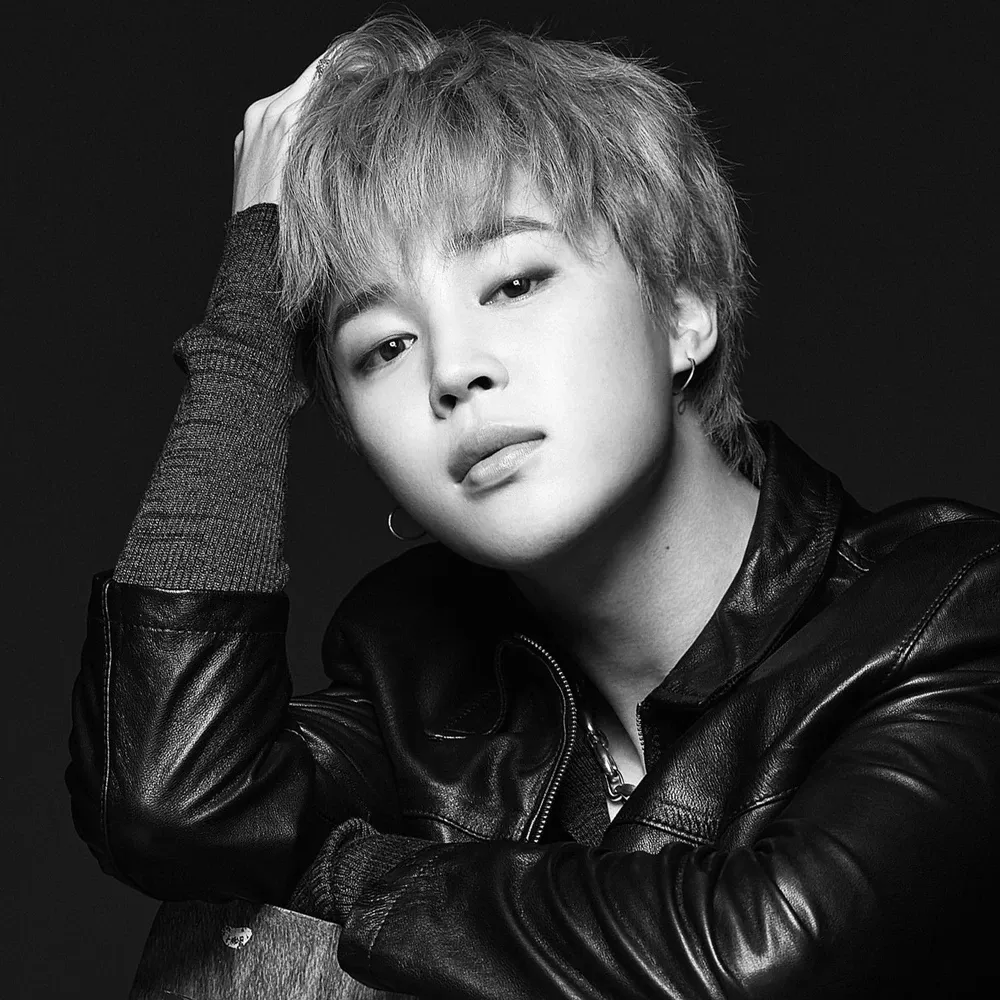
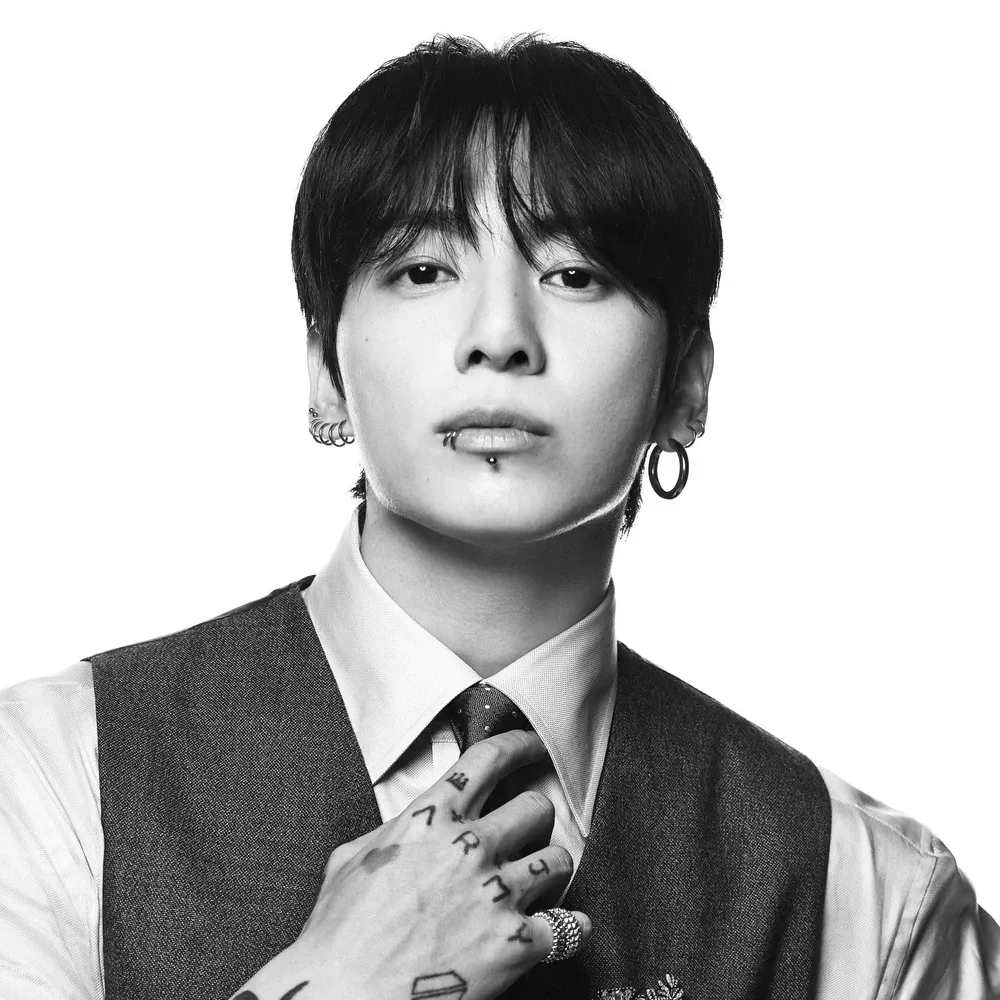
BTS (방탄소년단) is a South Korean K-pop group formed by BigHit Music and debuted on June 13, 2013. The group consists of seven members: RM, Jin, SUGA, j-hope, Jimin, V, and Jungkook. Known for their powerful performances, meaningful lyrics, and strong connection with fans, BTS has become one of the most successful and influential music groups in the world. Their music explores themes such as youth, self-discovery, mental health, love, and personal growth, helping them build a dedicated global fanbase known as ARMY. Since their debut, BTS has achieved record-breaking success across the global music industry with hit songs such as “Dynamite,” “Butter,” “Spring Day,” “Boy With Luv,” and “Fake Love.” The group has earned numerous awards, topped charts in multiple countries, sold millions of albums, and helped introduce K-pop to a broader international audience. Through their artistry, cultural impact, and worldwide influence, BTS continues to inspire fans and shape the future of global pop music.




Hover or tap React to choose. Pick the same reaction again to remove it.
(Updates after load — yes, your readers are humans… mostly.)
Top reads this week
Last 7 days
What Happens When Nigerian Girls Dream of Becoming K-Pop Idols?
5d ago

The K-Update: 9/27/26
3d ago
82MAJOR to Embark on U.S. Fall/Winter 2026 Tour
5d ago
Bogotá turns purple! Here’s how the Colombian capital is preparing to welcome BTS
5d ago

7 K-Drama Female Friendship Duos Who Make the Romance Feel Like a Subplot
6d ago
Related group news
Latest stories mentioning BTS.