The Grammys Named Their First Asian Pop Nominees. Why Is BTS Still the Headline?
Key takeaways
Quick summary- 1The Grammys’ first Asian Pop nominations mark a historic milestone, but BTS’s absence has overshadowed the nominees, raising questions about media representati…
The 2027 Grammy Awards introduce Best Asian Pop Music Performance, recognizing six nominated recordings in the category's inaugural year.
Graphic courtesy of the Recording Academy.
As six recordings make history in the inaugural Best Asian Pop Music
Performance category, coverage of BTS
×
 's absence raises questions about whose
achievements receive attention – and one outlet's mistake reveals what happens
when the nominees become an afterthought.
By Cena Haddad
The Recording Academy has announced the first nominees for Best
Asian Pop Music Performance: BABYMETAL and Polyphia's “Sunset Kiss,” BINI's
“Unang Kilig,” IVE
×
 's “BANG BANG,” KiiiKiii's “404 (New Era),” LiSA
×
 's “YES,” and
SB19's “VISA.”
It should have been a moment centered on the six nominated recordings. Instead, some of the coverage returned to the most recognizable artist missing from the ballot: BTS.
That absence matters. BTS
declined to submit music after objecting to music being divided by region
or language. Stray Kids
×
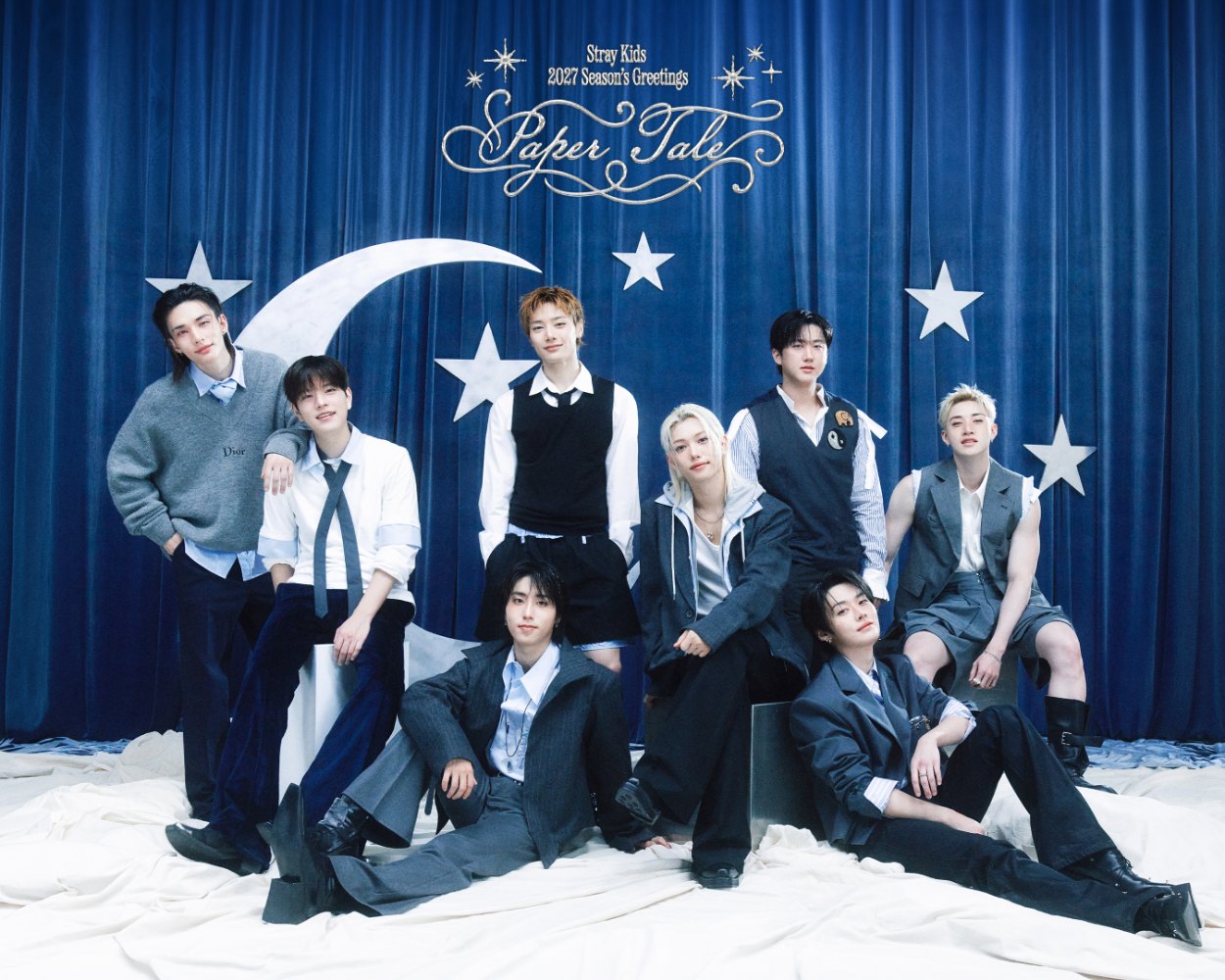 later chose not to submit eligible releases, while
several other prominent K-pop acts reportedly avoided the new category.
But there is a difference between explaining the controversy and allowing it to eclipse the nominees.
Rolling
Stone devoted an article to BTS's absence, only to misidentify Japanese
singer LiSA as BLACKPINK
×
 's LISA while listing the artists who were actually
nominated.
If this category was created to give Asian artists a dedicated spotlight, its first nominations have already exposed a contradiction: some music coverage has centered the controversy surrounding absent artists while giving comparatively little attention to those actually nominated.
The Inaugural Nominees
Best Asian Pop Music Performance is not simply a renamed K-pop award.
The Recording Academy defines the category as recognizing contemporary pop originating from or widely recognized within Asian markets. Eligible recordings must feature meaningful use of an Asian language, while songs performed entirely in English remain eligible for consideration in other categories.
Its inaugural nominees represent several distinct music communities. BINI and SB19 come from the Philippines' P-pop scene, while LiSA and BABYMETAL represent Japan, the latter alongside American instrumental band Polyphia. IVE and KiiiKiii represent South Korea's K-pop industry.
For IVE
and KiiiKiii, the nominations mark a historic
milestone for K-pop girl groups, following the earlier Grammy recognition
of multinational girl group KATSEYE
×
 .
The category's range is precisely why its nominees deserve individual attention. These recordings reflect different musical traditions, languages, and industries. Treating them as interchangeable representatives of “Asian music” risks repeating the same cultural flattening critics feared when the award was introduced.
The Absence That Became the Headline
As the nominations circulated, the achievements of the inaugural nominees began sharing headlines with artists who were not on the ballot.
Korea
JoongAng Daily introduced the results with the headline, “Jennie
×
 , KiiiKiii,
IVE earn Grammy nods, but attention lingers on BTS boycott.” Although the
article acknowledged the historic nominations, it also dedicated substantial
space to BTS's absence, the group's Grammy history, and other K-pop acts that
declined to participate.
Rolling Stone took a more direct approach, leading with “Don’t Be Surprised That BTS Aren’t Nominated for the 2027 Grammys.” The article revisited BTS's decision, the Recording Academy's response, and Stray Kids' absence before listing the nominees near the end.
The attention surrounding BTS is understandable. Their influence, Grammy history, and objection to the category made their absence significant. When one of the world's most commercially successful groups declines to participate, that decision becomes news.
Yet in these articles, the nominees received comparatively little attention beyond their historic recognition. Their achievements were discussed in relation to BTS's absence, while their music and individual careers received far less examination.
Best Asian Pop Music Performance was introduced to expand recognition for Asian artists. But when its first nominees were announced, even coverage acknowledging their achievements often returned to the artists who were missing.
Why the Boycott Still Matters
BTS's decision challenged the premise of the new category, raising questions about whether dedicated recognition could also reinforce the divisions it was meant to address.
When BTS announced it would not submit ARIRANG or its songs for Grammy consideration, the group expressed hope that its music could be appreciated without being categorized by region or language. The award's focus on Asian markets and its language requirement brought that concern into sharper focus.
Recording Academy CEO Harvey Mason Jr. defended the category, explaining that its purpose was to expand recognition rather than restrict it. He also clarified that submitting music in the Asian pop category would not prevent artists from competing in general categories such as Album of the Year or Song of the Year. Following discussions with members of the Asian music community, the Academy decided to move forward with the award.
Yet eligibility does not guarantee equal consideration. A dedicated category may introduce voters to artists they previously overlooked, but it also raises questions about whether those artists will receive the same recognition in the Grammys' most prominent fields.
The concerns extended beyond BTS. Stray Kids also declined to submit music, although their agency did not publicly confirm that the decision was a protest. Meanwhile, artists from several major Korean agencies reportedly did not enter the new category.
The boycott therefore raises a question that extends beyond any single artist: Will Best Asian Pop Music Performance help Asian artists gain broader recognition, or establish another boundary around where their music belongs?
When Lack of Attention Becomes Misidentification
The imbalance became particularly apparent when Rolling Stone misidentified one of the inaugural nominees.
In its coverage of BTS's absence, the publication credited “YES” to BLACKPINK's LISA, describing her as a Thai rapper and singer. The actual nominee is LiSA, a Japanese singer with an entirely separate career.
This was more than a capitalization error. By confusing Japanese singer LiSA with BLACKPINK's LISA, the article misrepresented the nominee's nationality, identity, and musical background.
The mistake is particularly striking given the article's detailed account of BTS's Grammy history, the group's decision not to participate, and the Recording Academy's response. Yet when the coverage turned to the nominated artists, one was incorrectly identified.
That contrast raises a broader concern about how familiarity shapes music coverage. While established K-pop stars receive extensive attention, artists outside that circle may receive less careful consideration, even when their achievements are the subject of the news.
A category intended to increase visibility cannot fulfill that purpose if the artists it recognizes are not accurately represented. Recognition begins with getting their identities right.
The Nominees Should Not Carry the Controversy
The controversy has also drawn criticism toward artists reportedly submitting music, with some facing scrutiny for pursuing recognition in a category that others refused to enter.
But the artists did not create the award or establish its eligibility rules. Those decisions belong to the Recording Academy, and receiving a nomination should not be mistaken for endorsing every decision behind it.
Asian artists also do not share a single perspective on what meaningful recognition looks like. In an interview with Billboard, BINI members Aiah and Maloi described the opportunity as “a door opening, not a box closing.” For artists working in music markets that have historically received less Grammy attention, a dedicated category can represent an important opportunity for visibility.
Chinese singer and Recording Academy voter Miist expressed a similar perspective. Speaking with NPR, she acknowledged the criticism surrounding the award while welcoming an opportunity for smaller, multilingual artists to gain recognition. She also argued that more Asian musicians should have been included in the Academy's decision-making process.
For BTS, accepting a category defined partly by geography and language could represent a step backward after years of competing in mainstream fields. For artists seeking greater international exposure, that same category may provide an opportunity previously difficult to access.
Neither perspective invalidates the other. The nominees deserve recognition without being treated as opponents of the boycott. The debate should remain focused on the Recording Academy's decisions and how the controversy is represented in music coverage.
A Dedicated Spotlight That Still Looks Elsewhere
The first test of Best Asian Pop Music Performance is not simply who takes home the Grammy. It is whether the category provides the visibility and recognition the Recording Academy intended.
Its inaugural nominations represent a milestone for artists across multiple Asian music markets. Yet the conversation surrounding them has exposed a familiar tension: creating space for Asian artists does not necessarily mean treating their music as an equal part of the industry's broader landscape.
BTS's objections deserve serious consideration, just as the nominees deserve coverage that engages with their work rather than defining their achievements through the absence of others.
The Recording Academy created a dedicated spotlight for Asian pop. Its first nominations have demonstrated that creating the space is only the beginning.
Meaningful recognition requires more than a place on the ballot. It requires giving the artists on it the attention they have earned.

Related groups
BTS (방탄소년단) is a South Korean K-pop group formed by BigHit Music and debuted on June 13, 2013. The group consists of seven members: RM, Jin, SUGA, j-hope, Jimin, V, and Jungkook. Known for their powerful performances, meaningful lyrics, and strong connection with fans, BTS has become one of the most successful and influential music groups in the world. Their music explores themes such as youth, self-discovery, mental health, love, and personal growth, helping them build a dedicated global fanbase known as ARMY. Since their debut, BTS has achieved record-breaking success across the global music industry with hit songs such as “Dynamite,” “Butter,” “Spring Day,” “Boy With Luv,” and “Fake Love.” The group has earned numerous awards, topped charts in multiple countries, sold millions of albums, and helped introduce K-pop to a broader international audience. Through their artistry, cultural impact, and worldwide influence, BTS continues to inspire fans and shape the future of global pop music.












BLACKPINK is one of the most influential K-pop girl groups in the world, known for their powerful performances, global chart success, and distinctive blend of pop, hip-hop, EDM, and rap. Formed by YG Entertainment, the group consists of Jisoo, Jennie, Rosé, and Lisa. Since their debut in 2016, BLACKPINK has achieved numerous milestones, including record-breaking music videos, sold-out world tours, and collaborations with internationally recognized artists. With a dedicated global fanbase known as BLINK, BLACKPINK continues to shape the modern K-pop industry through their music, fashion influence, and worldwide cultural impact. The group has earned recognition for hit songs such as “DDU-DU DDU-DU,” “How You Like That,” “Pink Venom,” and “Shut Down,” while establishing themselves as one of the most successful and recognizable Korean music acts of all time!












Hover or tap React to choose. Pick the same reaction again to remove it.
Comments
(Updates after load — yes, your readers are humans… mostly.)
Top reads this week
Last 7 days
NCHIVE Interview: “Without SAVE, There Would Be No NCHIVE”
4d ago

A New Mark: Swan on Forging Her Own Path as a Solo Artist
4d ago

BTS V Stars in Harper's BAZAAR Korea December 2026 Issue with Cartier
6d ago

CLOSE YOUR EYES Turned Halloween in Chicago Into a Party
6d ago

Concert Review: NCHIVE Bring the WE’VE Tour to MEX Berlin
3d ago
Related group news
Latest stories mentioning BTS, IVE and more.