
J.Y. Park’s Remarks Reopen the Question of Who Gets Credit for K-Pop’s Global Growth
Key takeaways
Quick summary- 11s and stadium concerts as familiar markers of K-pop’s collective growth.
- 2Park Jin-young’s recent comments framed Billboard No.
- 3This article examines why that framing risks minimizing BTS’s distinct role in transforming K-pop’s global reach while arguing that recognizing their impact do…
J.Y. Park, founder of JYP Entertainment and co-chair of the Presidential Committee on Popular Culture Exchange.
Photo via JYP Entertainment.
Park Jin
×
 -young’s recent remarks treated Billboard No. 1s and
stadium concerts as familiar signs of K-pop’s progress – but those milestones
did not become ordinary on their own.
-young’s recent remarks treated Billboard No. 1s and
stadium concerts as familiar signs of K-pop’s progress – but those milestones
did not become ordinary on their own.
By Cena Haddad
K-pop’s global success is often told as a collective story.
Each generation contributes to the industry’s expansion. Earlier artists
enter unfamiliar markets, later groups reach larger audiences, and
accomplishments once considered impossible gradually begin to appear
attainable.
But when that history is compressed too neatly, the artists responsible for
its most significant transformations can disappear inside the word “K-pop.”
Park Jin-young, also known professionally as J.Y. Park, renewed that concern
during an October 7, 2026, appearance before South Korea’s National Assembly
Culture, Sports and Tourism Committee.
While presenting the work of the Presidential Committee on Popular Culture
Exchange, Park recalled taking Wonder Girls across 50 American cities and
sacrificing considerable domestic earnings to pursue an international audience.
He also highlighted the group’s historic entry onto the Billboard Hot 100 with
“Nobody.”
That achievement deserves recognition.
Park then moved from Wonder Girls’ breakthrough to K-pop’s current position,
describing Billboard No. 1 placements and stadium audiences of 50,000 to
100,000 people as accomplishments that are no longer particularly
rare.
He used that growth to support a larger argument: K-pop has reached a limit
that individual companies cannot overcome alone. Moving forward, he suggested,
will require greater cooperation between the industry and government through
projects such as Fanomenon, a planned concert, awards show, and exhibition
jointly organized by HYBE, JYP Entertainment, SM Entertainment, and YG
Entertainment.
The concern surrounding K-pop’s long-term growth is worth discussing. The
problem is how easily Park’s account moves from an early breakthrough to a
present in which chart-topping releases and stadium concerts appear to be
familiar features of the industry.
Multiple K-pop artists have now topped the Billboard 200, the chart
measuring album consumption. Stray Kids
×
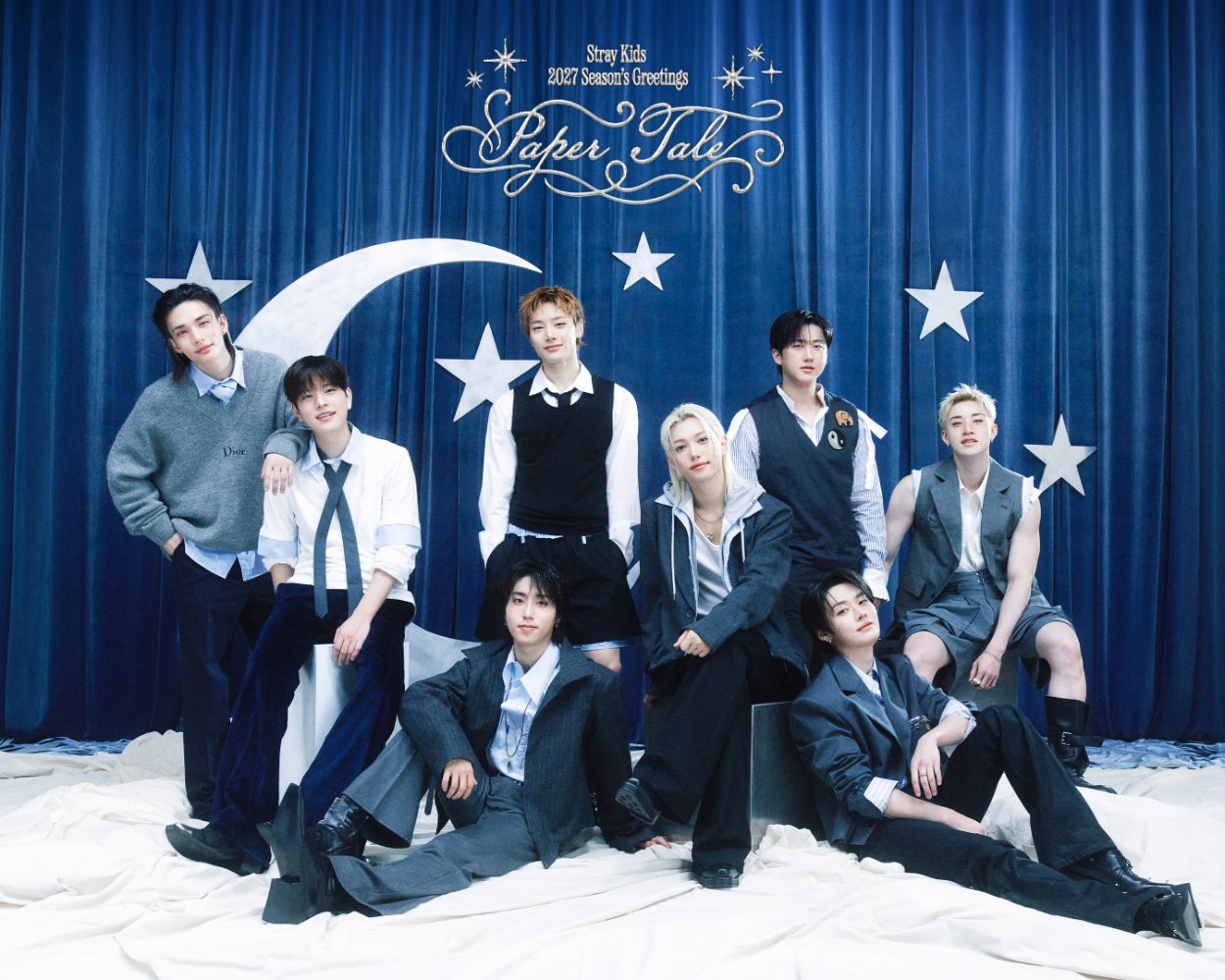 currently hold the most No. 1 albums
among K-pop acts on that ranking.
currently hold the most No. 1 albums
among K-pop acts on that ranking.
The Billboard Hot 100, which ranks individual songs, tells a different
history.
BTS
×
 became the first all-South Korean act to reach No. 1 when “Dynamite”
debuted at the top in 2020. The group followed it with additional No. 1 singles
and a touring presence that expanded expectations for what a Korean artist
could achieve internationally.
became the first all-South Korean act to reach No. 1 when “Dynamite”
debuted at the top in 2020. The group followed it with additional No. 1 singles
and a touring presence that expanded expectations for what a Korean artist
could achieve internationally.
Park did not deny that history or claim BTS played no role in K-pop’s
expansion.
Yet when those milestones are presented primarily as evidence of how far
“K-pop” has come, achievements driven disproportionately by one group begin to
resemble the natural progress of an entire industry.
The question is not whether Park intended to diminish BTS.
It is what happens when an artist changes an industry’s scale so completely
that their exceptional achievements are eventually discussed as though they
were always its destination.
Breakthrough Is Not the Same as
Transformation
Wonder Girls’ entry onto the Billboard Hot 100 was historically important.
“Nobody” reached No. 76 in 2009, making the group the first Korean act to
appear on the chart.
Their American campaign brought a Korean idol group before audiences who had
little familiarity with the industry, years before K-pop developed its current
international infrastructure.
That achievement can be recognized without treating every later milestone as
its inevitable continuation. A breakthrough can create a possibility without
determining how far another artist will take it.
BTS did not simply repeat the international efforts of earlier K-pop acts on
a larger scale. The group created sustained demand that changed how Korean
artists were understood by American media, concert promoters, retailers, award
institutions, and audiences.
Before “Dynamite” reached No. 1, BTS had already topped the Billboard 200
multiple times, performed at major American award shows, addressed the United
Nations, and sold out stadiums across several countries.
That success continued across Korean- and English-language releases, albums,
tours, and solo projects – even during a years-long pause in full-group
activities as the members completed their military service.
When BTS returned, the demand remained. According to BigHit Music, the North
American leg of the ARIRANG tour drew 1.9
million attendees across 31 sold-out concerts. Its four 2026 shows
at SoFi Stadium attracted 282,000 people, bringing BTS’s cumulative attendance
at the venue to 496,000 across eight concerts in 2021 and 2026 – the highest
recorded for any group since the stadium opened.
Those figures do not demonstrate that stadium demand has become routine
across K-pop. They demonstrate that BTS continues to operate at an exceptional
scale.
Wonder Girls proved that a Korean idol group could enter the Hot 100. BTS
later transformed what sustained global success could look like for a Korean
act.
Both accomplishments belong in the story, but they represent different forms
of impact.
BTS benefited from the work of artists who entered international markets
before them. The artists who followed BTS have also benefited from the market
the group helped expand.
An accurate history must be capable of acknowledging both truths.
Has K-pop Reached Its Limit – or BTS’s?
Park’s concern about K-pop reaching a limit should not be dismissed
entirely.
The industry’s international expansion raises legitimate questions about
sustainability, market saturation, and whether its growth can continue at the
same pace. It also remains heavily concentrated among a relatively small number
of companies and artists.
That concentration complicates the idea that K-pop has collectively reached
the level Park described.
More groups can now enter international charts, tour outside Asia, and build
global fan communities. Those developments represent meaningful progress. They
do not mean the average K-pop artist can fill a 50,000-seat stadium or
repeatedly reach No. 1 on a major American chart.
BTS remains an outlier in the scale and breadth of the success frequently
used to measure K-pop’s global position.
That distinction becomes especially relevant when considering Fanomenon. The
project is being organized through a joint venture in which HYBE, JYP
Entertainment, SM Entertainment, and YG Entertainment hold equal stakes.
Park acknowledged that securing their participation required sacrifice. If
the companies held separate performances instead, he said, they could earn
two or three times as much.
His explanation reveals how much of K-pop’s global influence remains
concentrated among leading companies and their most commercially powerful
artists.
Park describes the industry as having reached a point where stadium
audiences and international chart success are no longer remarkable. Yet its
proposed next step remains centered on the same leading companies whose artists
already command much of that attention.
This does not mean K-pop has reached BTS’s limit.
It may mean the wider industry has not reproduced it.
BTS expanded the possibilities available to Korean artists, but a larger
market does not guarantee equal results within it. More artists can participate
globally without operating at the same commercial scale.
That distinction does not diminish anyone else’s success. It recognizes that
industry-wide progress and exceptional individual achievement are not
interchangeable.
Analysis becomes misleading when an outlier is treated as evidence of what
an entire system has achieved – or what it can reliably repeat.
If K-pop has reached a ceiling, the first question should be whose ceiling
is actually being measured.
Credit Is Not a Competition
Giving BTS appropriate credit does not require rewriting K-pop’s history
around one group.
Wonder Girls’ American campaign mattered. So did the global audiences
cultivated by artists including BoA, TVXQ, Girls’ Generation
×
.jpg) , BIGBANG
×
, BIGBANG
×
 , and PSY.
Later groups have continued expanding the industry through their own music,
touring, and fan communities.
, and PSY.
Later groups have continued expanding the industry through their own music,
touring, and fan communities.
One artist does not need to lose recognition for another to receive it.
The problem begins when collective language replaces specificity.
Saying that “K-pop” reached No. 1 on Billboard removes the artists,
audiences, strategies, and circumstances behind each achievement. Describing
stadium concerts as ordinary can make years of audience-building appear like
the predictable result of an industry plan.
BTS’s rise was not predictable.
The group emerged from Big Hit Entertainment when the company was
considerably smaller than the agencies dominating K-pop. Its audience grew
through the music, direct online communication, fan translation networks,
sustained storytelling, and a relationship with listeners that established
industry power alone could not guarantee.
As that audience expanded, institutions that had previously treated K-pop as
peripheral were forced to reconsider the scale of its influence.
BTS did not create every opportunity later Korean artists received. The
group did, however, change the scale at which Korean artists could be
considered internationally. That influence should not be absorbed so completely
into a broad story of national or industry success that the people responsible
become nearly invisible within it.
Park’s larger argument – that K-pop needs cooperation, infrastructure, and
long-term planning – may be valid. Fanomenon may also create new opportunities
for Korean artists and other cultural industries.
But building the industry’s future does not require simplifying its past.
Moving beyond K-pop’s current limits begins with understanding how those
limits were moved before. That means recognizing early breakthroughs without
treating them as equivalent to later transformation, and celebrating collective
growth without pretending every artist or company contributed to it equally.
K-pop’s global history belongs to many artists.
Its most transformative chapters still deserve their proper authors.

Related groups
.jpg)
.jpg)


.jpg)

.jpg)
.jpg.webp)
BIGBANG is a South Korean boy group that debuted in 2006. Known for major influence on modern K-pop, the group is widely associated with hits across multiple eras and a strong global fanbase. The group is commonly treated as currently active with G-DRAGON, Taeyang, and Daesung.

.jpg)

BTS (방탄소년단) is a South Korean K-pop group formed by BigHit Music and debuted on June 13, 2013. The group consists of seven members: RM, Jin, SUGA, j-hope, Jimin, V, and Jungkook. Known for their powerful performances, meaningful lyrics, and strong connection with fans, BTS has become one of the most successful and influential music groups in the world. Their music explores themes such as youth, self-discovery, mental health, love, and personal growth, helping them build a dedicated global fanbase known as ARMY. Since their debut, BTS has achieved record-breaking success across the global music industry with hit songs such as “Dynamite,” “Butter,” “Spring Day,” “Boy With Luv,” and “Fake Love.” The group has earned numerous awards, topped charts in multiple countries, sold millions of albums, and helped introduce K-pop to a broader international audience. Through their artistry, cultural impact, and worldwide influence, BTS continues to inspire fans and shape the future of global pop music.














Hover or tap React to choose. Pick the same reaction again to remove it.
Comments
(Updates after load — yes, your readers are humans… mostly.)
Top reads this week
Last 7 days
Beyond borders: An open Conversation with MEPC on diversity, science fiction, and the art of connecting
1d ago

Meet TEAMILY: How &TEAM Is Turning Its Members’ Personalities Into Characters for Fans
5d ago

Former ATBO Member Jeong Seunghwan Goes Viral at 2026 Ground Forces Festival
5d ago

Watch: TWICE Introduces Official Characters TDOONGZ
6d ago
Album Review: CRAVITY’s 9th EP ‘sonorous’
4d ago
Related group news
Latest stories mentioning Girls’ Generation, BIGBANG and more.