More Than a Job: Occupation, Identity, and Female Agency in K-Dramas
Key takeaways
Quick summary- 1[https://seoulbeats.com/wp-content/uploads/2019/09/20190903_Hotel-Del-Luna_IU_tvn_1-1024x640.png]As K-dramas entertain audiences worldwide, they also shape how…
- 2At the sam
[https://seoulbeats.com/wp-content/uploads/2019/09/20190903_Hotel-Del-Luna_IU_tvn_1-1024x640.png]
As K-dramas entertain audiences worldwide, they also shape how viewers perceive Korean culture, even as they are influenced by evolving social trends and shifting mindsets. At the same time, not every workplace or gender dynamic shown on screen reflects everyday reality. Some dramas mirror changing Korean society, while others imagine the kinds of professional and personal lives audiences increasingly want to see.
Owing to Hallyu, global demand for Korean dramas has increased rapidly and, in many cases, now exceeds domestic demand. The growing popularity of Netflix originals and OTT K-dramas suggests that many dramas are now being made with global audiences in mind. Various industry reports and audience studies also suggest that a majority of the international audience of Korean dramas is female. With shifts in the age and occupations of these women, as well as broader cultural changes in Korean society, K-drama creators have also changed the roles and jobs assigned to women, at least in some, if not all, dramas.
[https://seoulbeats.com/wp-content/uploads/2026/08/20260802_seoulbeats_a_busines_proposal.png]
Many K-dramas have centered the male lead. However, in recent years, women-led narratives have grown significantly in number, often offering more complex storytelling than conventional rom-coms. According to figures released by South Korea’s national broadcaster KBS, over 53% of lead characters in the network’s dramas were female in 2021, a slight increase on its five-year average of 49.8%. On the country’s other networks, the figure was roughly 40% between 2017 and 2020. One reason behind this could be the growing expectations of the female audience, who no longer wish to watch passive characters and instead want to feel empowered by the stories they consume.
As audience tastes change with the times, dramas are redefining what power looks like for women. Modern K-dramas increasingly center female characters with greater agency, not only through powerful jobs, but through their ability to actively shape their lives, make independent decisions, speak up for what they believe is right, and prioritise themselves. Additionally, creators are more willing to depict men going against traditional gender expectations, including a greater willingness to be vulnerable. There has been a clear expansion in stories that explore gender, power, and social status from different perspectives. Female-led narratives do not always present women as morally right or flawless; instead, they portray them as independent and resilient, if not at times morally grey. Power is not defined only by status or dominance, but the ability to stand one’s ground, and refuse to appear or feel weak, especially in front of men.
Whether these portrayals reflect real changes in Korean society or simply the stories audiences want to believe, occupations provide a clear way to examine them. Sometimes, they are merely narrative devices used as catalysts for romance. This is common in workplace rom-coms such as Business Proposal, where the CEO Kang Tae-moo (Ahn Hyo-seop) and employee Shin Ha-ri (Kim Se-jeong) are placed in a hierarchical relationship that primarily serves to create romantic tension and comedic set-ups in the company rather than deepen character development. This allows viewers to enjoy the romance without engaging with deeper questions about work, identity, or ambition. But at the same time, it neglects character depth and reduces occupations to narrative devices rather than allowing them to influence a character’s ambitions and identity.
[https://seoulbeats.com/wp-content/uploads/2026/08/260802_seoulbeats_crash_landing_on_you.png]
In other dramas, occupation plays a central role in shaping personality. In Crash Landing on You, Yoon Se-ri (Son Ye-jin) is the CEO of a successful company in South Korea. Her occupation reinforces her confidence and independence throughout the series, ultimately contributing to her identity. Meanwhile, Ri Jeong-hyeok (Hyun Bin) is a North Korean army officer, and his role drives the main plot of hiding a South Korean woman in North Korea.
Had he been a civilian or in any other profession, he would not hold such power and authority to hide her and finally help her cross the border back to her home. As a CEO, Se-ri at independent at decision making and financially well off. Her actions like buying a building and then using the gangster tenants to her advantage in return to which she promises to not receive rent is an example of the power she holds. Her romance with Ri Jeong-hyeok is also defined by this. She tries to protect him using the various different means that she has including political and judicial connections. Contrasting to traditional heroines, Se-ri doesn’t wait to be rescued. She also tries her best to protect the one she loves.
[https://seoulbeats.com/wp-content/uploads/2026/08/260802_seoulbeats_my_love_from_star.png]
In My Love from the Star, Cheon Song-yi (Jun Ji-hyun) is a famous actress whose celebrity status shapes her bold and outspoken personality. Her profession contributes to her character development rather than merely connecting her to Do Min-joon (Kim Soo-hyun). Being a celebrity creates a situation for her in which she is exposed to intense public scrutiny. When she becomes embroiled in a scandal surrounding the death of a fellow actress, her reputation and career take a hit, causing a dramatic fall from stardom. As a result, she gradually undergoes a process of self-realisation and personal growth and we get to see a more serious side of her as compared to her whimsical personality in the beginning of the show. Her fearlessness and reckless behaviour with her embrace of a quirky personality is the clear proof of the confidence and power she holds in the society.
Released in 2013, the drama clearly demonstrates that women have long been portrayed in diverse occupations, mainly for a comedic effect — at least in this show — but we also get to see their growth out of comedic situations while being in a certain profession. My Love from the Star lets a successful woman remain loud, vain, selfish, funny, emotional, and competent all at once. Her celebrity status gives her permission to be larger than life. However, there has been a noticeable expansion in such representations in recent years. K-drama creators now more openly explore themes such as women’s ambition and resistance while increasing the number of women-led narratives that challenge societal norms.
[https://seoulbeats.com/wp-content/uploads/2026/08/260802_seoulbeats_boyfriend_on_demand.jpg]
Government research and reports suggest that Korean women’s working life is challenging. Korean workers (men and women) spend the longest hours at work (OECD, 2021) while Korean men spend the second shortest amount of time doing house chores (OECD, 2020). This disparity symbolically highlights Korean women workers’ burden inside and outside of work. Take for example, Boyfriend on Demand. Seo Mi-rae (Kim Ji-soo) has been shown working overtime, living away from family and above all, away from any real-life dating in the first part of the show. This highly contradicts the social norm and is an example of the cultural fantasies that the audience wishes to see — almost an ideal world. This is a case where K-dramas challenge the existing workplace norms. They now allow women to prioritise their careers and take their own decisions. Their lives are no longer tied to men in K-dramas. If they want, they can make their own choices.
Yet having a profession is only one part of the story. Workplace hierarchies, who one works under, who works under them, and how much respect they command, play a significant role in constructing a character’s identity and perceived power. Especially in Korean culture, there is a strong hierarchical system where others expect employees with lower status to work harder to help those above them. In the case of women, there are far less opportunities for promotion when looking at the OECD data.
[https://seoulbeats.com/wp-content/uploads/2026/08/260802_seoulbeats_whats_wrong_with.jpg]
Women working as subordinates to male leads have long been a common trope in dramas such as What’s Wrong with Secretary Kim?, where Kim Mi-so (Park Min-young) serves as the secretary to Lee Young-joon (Park Seo-joon). Despite excelling at her job, she remains in a subordinate position within the company. Even after their marriage, the workplace hierarchy continues to overshadow Mi-so’s professional ambitions. Although she is highly competent, the series ultimately prioritises her romantic relationship over her career, reflecting a familiar pattern in workplace romances where a woman’s professional identity becomes secondary once romance takes centre stage.
Dramas do not just present the struggles of job status, they can also make way for stronger and more prominent female characters. Of course, characters such as Jang Man-wol (IU
×
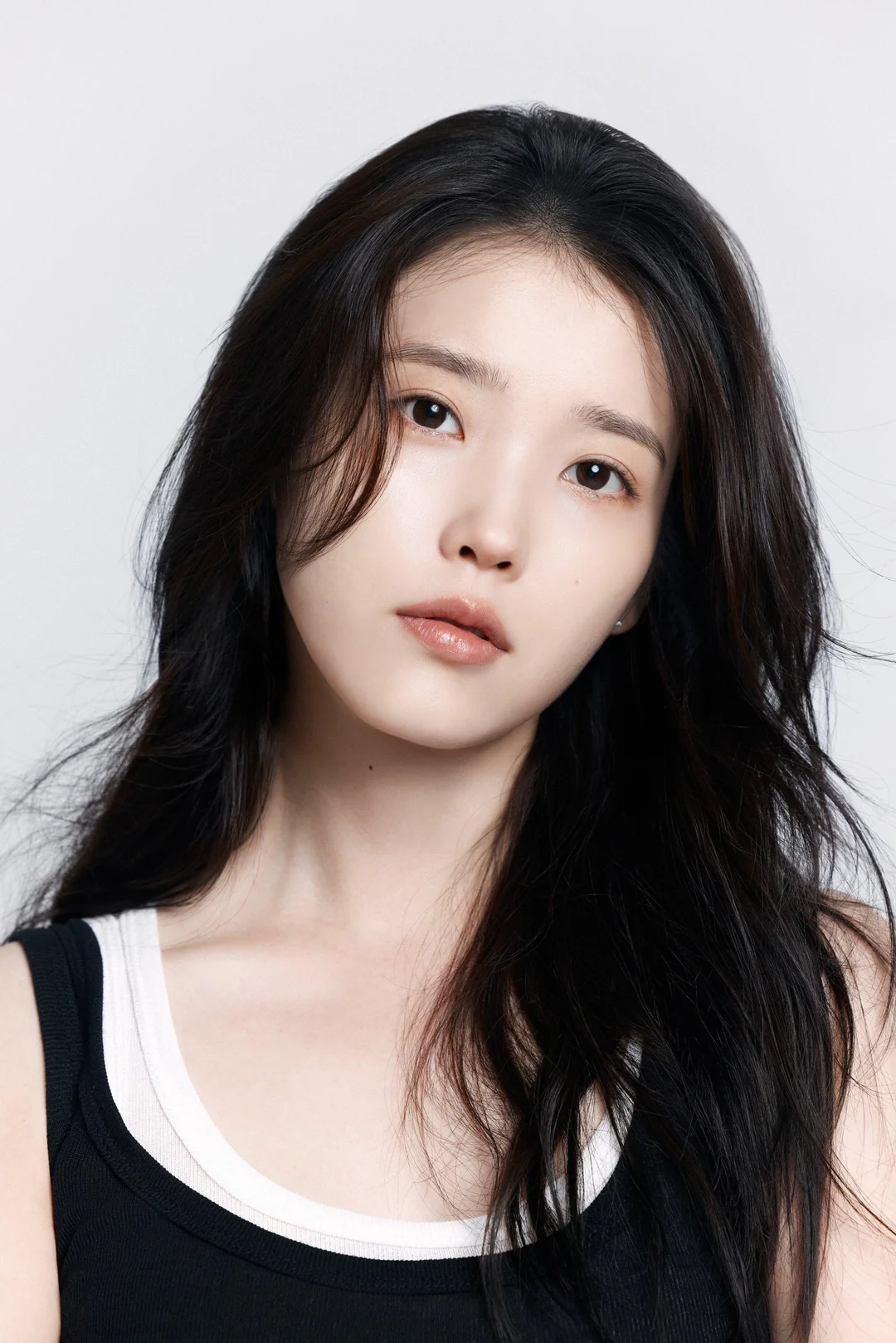 / Lee Ji-eun) in Hotel Del Luna are portrayed as powerful business owners, command authority and respect. But characters who, even though, work as a subordinate like Mun Ga-young’s character: Baek Su-jeong in My Dearest Nemesis, are also shown demanding respect and autonomy, as well as fighting for them. This is the direct consequence of increasing agency which gives them the power to be who they are.
This evolution also extends to male characters.
In My Dearest Nemesis, Mun Ga-young’s boss played by Choi Hyun-wook enjoys a secret fanboy lifestyle which is often considered traditionally too “feminine” for men. But we find him overcoming that stereotype and confidently being who he is at the end of the series. And in It’s Okay Not to Be Okay, Moon Gang-tae (Kim Soo-hyun) works as a psychiatric caregiver and is emotionally expressive and humble. Rather than being the dominant provider, he struggles financially and lives modestly while caring for his older brother. He often relies on Ko Moon-young (Seo Yea-ji), a wealthy and successful children’s book author. At certain points, he even lives in her house. Although their support is mutual, the portrayal of a male lead depending on a female lead represents a shift in traditional gender dynamics.
[https://seoulbeats.com/wp-content/uploads/2026/08/260802_seoulbeats_My_Dearest_Nemesis-1024x683.jpg]
Through entertainment, these dramas encourage viewers to question conventional ideas about masculinity and gender roles. They also try to challenge these stereotypes through storytelling. Still, South Korea continues to exhibit one of the widest gender employment gaps among OECD member countries. This contrast suggests that while K-dramas increasingly imagine more equal gender dynamics, these portrayals often represent aspirations rather than the everyday reality of Korean society.
The evolving portrayal of women in K-dramas suggests that they are also participating in reshaping of conventional plots. Female characters are not limited to being romantic interests or emotional supporters. They are written as flawed (Jang Man-wol in Hotel Del Luna), ambitious like Baek Su-jeong in My Dearest Nemesis, morally complex such as Ko Moon-young in It’s Okay To Not Be Okay, and self-driven (Yoon Se-ri in Crash Landing on You) individuals who actively shape their own narratives. Whether through workplace hierarchies, or character-driven narratives, women are increasingly shown exercising agency rather than waiting to be rescued. It is a direct attempt at normalising images of female ambition that may not yet be common in everyday life.
[https://seoulbeats.com/wp-content/uploads/2026/08/260802_seoulbeats_its_okay-1024x552.png]
At the same time, traditional tropes have not completely disappeared with gendered expectations still existing in many narratives. However, the growing number of stories that challenge these norms indicate
Hover or tap React to choose. Pick the same reaction again to remove it.
Comments
(Updates after load — yes, your readers are humans… mostly.)
Top reads this week
Last 7 days
Thai and K-Pop Stars Bring Star Power to the Singapore F1 Grand Prix
3d ago

SEVENTEEN’s JEONGHAN x JOSHUA Debut with 'DREAMSCAPE': Tracklist, Music Video & More
5d ago
Beliebers, Assemble! Justin Bieber’s SKYLRK Pop-Up Hits Seongsu, Seoul
1d ago
PSY Passed the Torch to BTS. Why Is K-Pop Still Fighting the Obvious?
2d ago
TEMPEST Announces Disbandment: Military Enlistment, Contract Expirations, and Solo Plans
3d ago
Related group news
Latest stories mentioning .